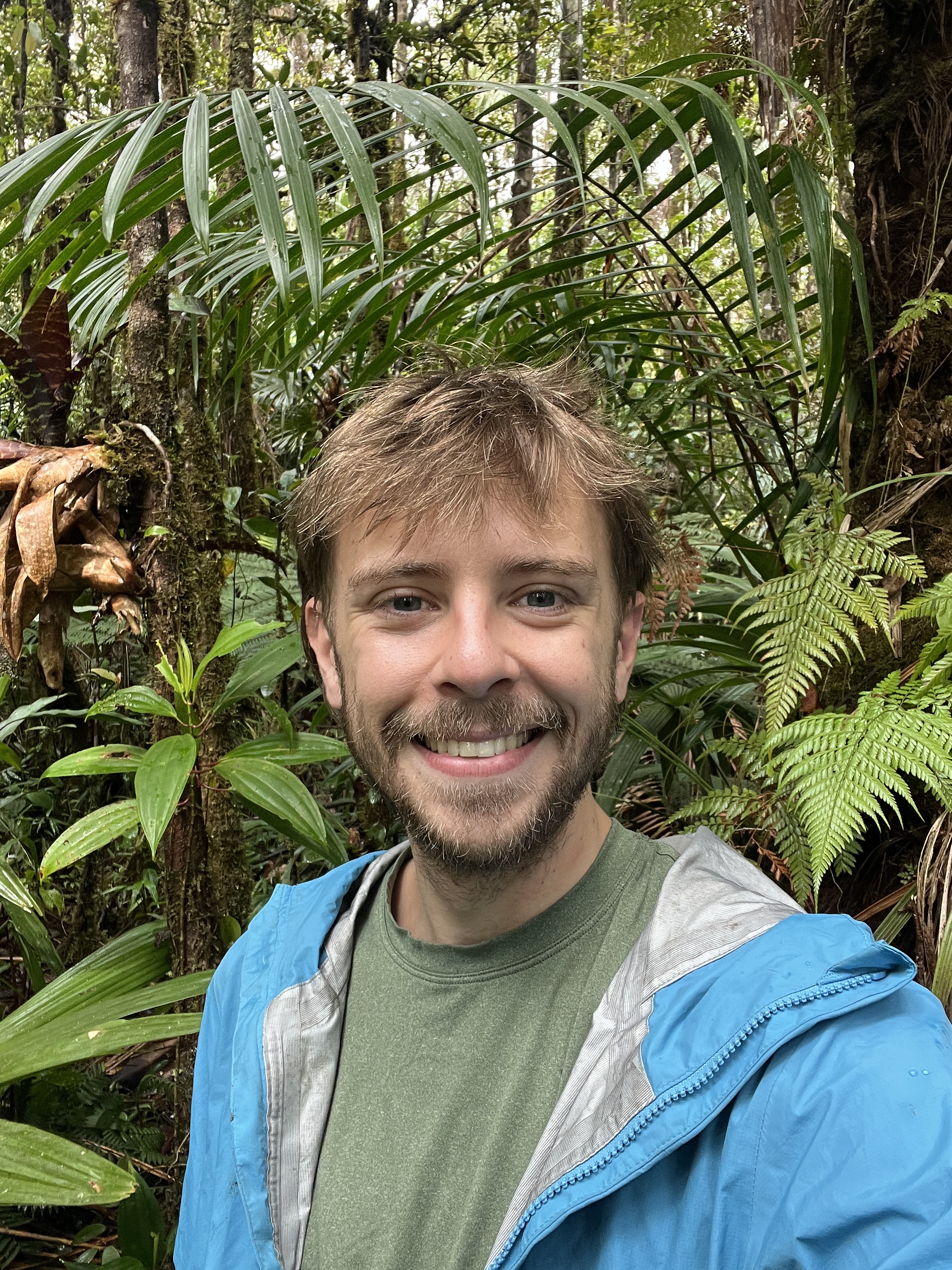
Blaine Martin
Community Ecology, Plant-Fungal Interactions, Tropical Forest Ecology
Ph.D. Student – Dalling Lab, Department of Plant Biology, University of Illinois Urbana-Champaign
B.S. – Tulane University (2023)
Blaine is an ecologist studying the complex interactions between fungi and their plant hosts in tropical forests, and how these relationships shape community assembly, plant growth, and ecosystem function. His research spans both fundamental and applied questions, from understanding fungal diversity and host specificity to exploring sustainable alternatives to fertilizers in tropical agriculture.
He received a B.S. in Ecology & Evolutionary Biology from Tulane University, where he completed an honors thesis on the root-associated fungi of tropical lianas and investigated nutrient acquisition strategies across dozens of Panamanian tree species. Following graduation, Blaine worked as a research assistant at the Smithsonian Tropical Research Institute in Panamá, studying foliar fungal pathogens, forest disease ecology, and the environmental and host factors influencing fungal communities.
Blaine is now a Ph.D. student in the Department of Plant Biology at the University of Illinois, supported by an NSF Graduate Research Fellowship and a University Fellowship. His dissertation focuses on root-associated Helotiales fungi in tropical Podocarps, investigating their host range, growth effects, and potential applications in sustainable agriculture. Through fieldwork, lab experiments, and greenhouse studies, he aims to uncover how these understudied fungi influence plant growth, forest dynamics, and ecological resilience.
Root-Associated Fungi

Exploring how trees partner with fungi to access nutrients and thrive in diverse environments.
Investigating the symbiosis between roots and their fungi, including mycorrhizae and root endophytes, across different soils and nutrient gradients. This work examines how root traits and environmental context shape fungal associations and plant nutrient acquisition.
Foliar Fungal Pathogens
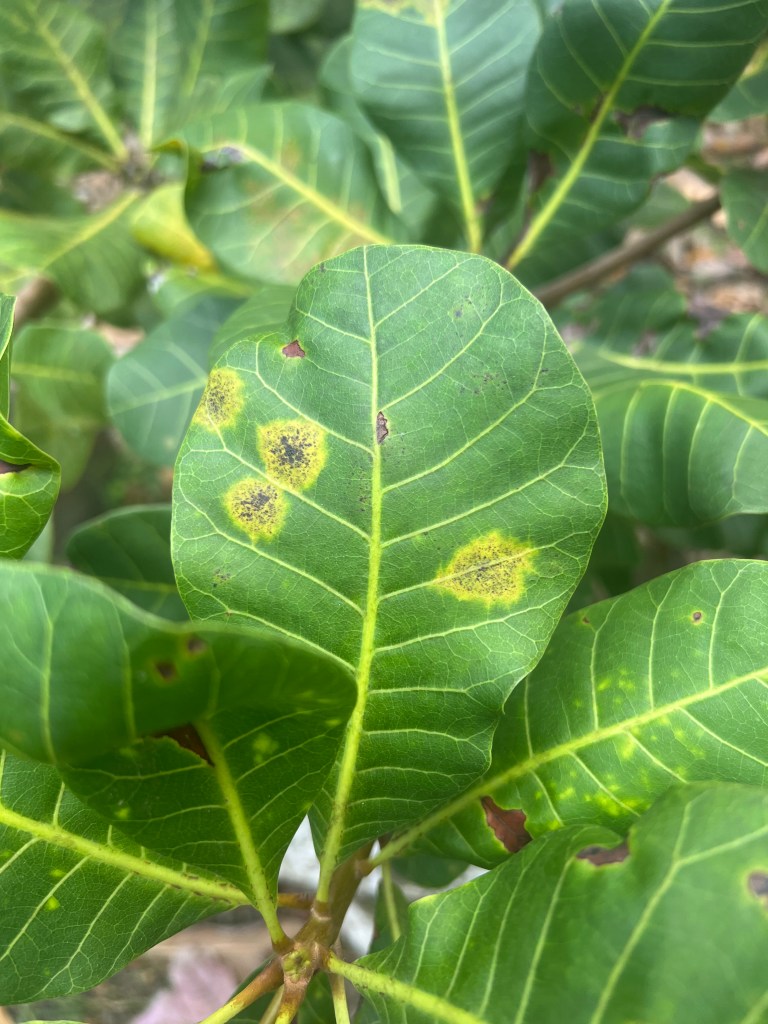
Studying how leaf fungi influence forest health, plant survival, and community dynamics.
Determining the distribution, host range, and effects of fungal pathogens on tropical trees. This research helps reveal how pathogens impact seedling recruitment, host demography, and the maintenance of forest biodiversity.
Fungal Community Composition

Uncovering the diversity and interactions of fungi in plant tissues.
Identifying the communities of fungi that inhabit leaves and roots, and exploring how species interactions—competition, facilitation, and coexistence—shape these communities. This work integrates natural history with ecological theory to better understand forest fungal biodiversity.
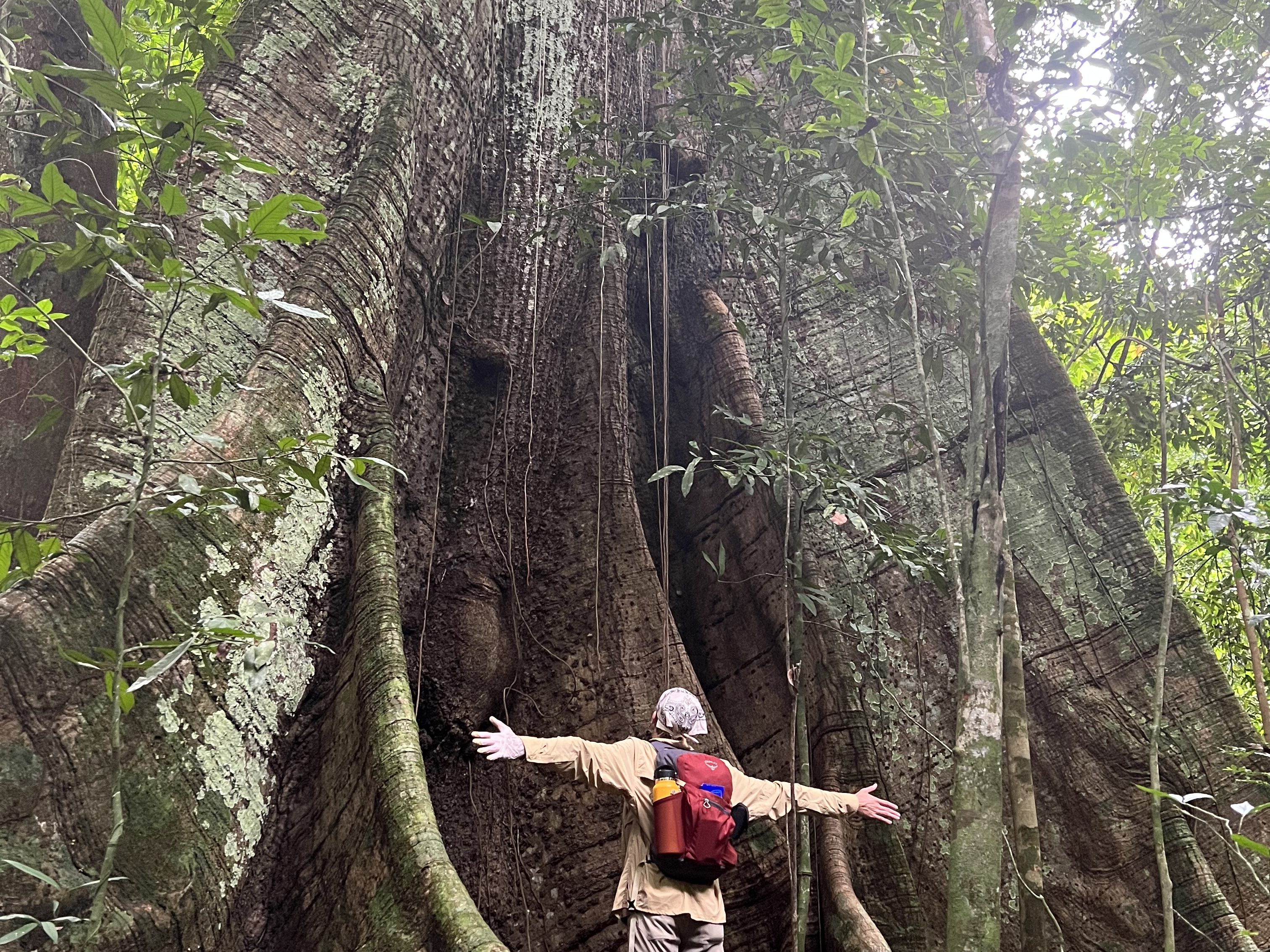
Barro Colorado Island, Panama
 Blaine D. Martin